
50 Spring Art Journal Prompts
Artful haven by Salwa
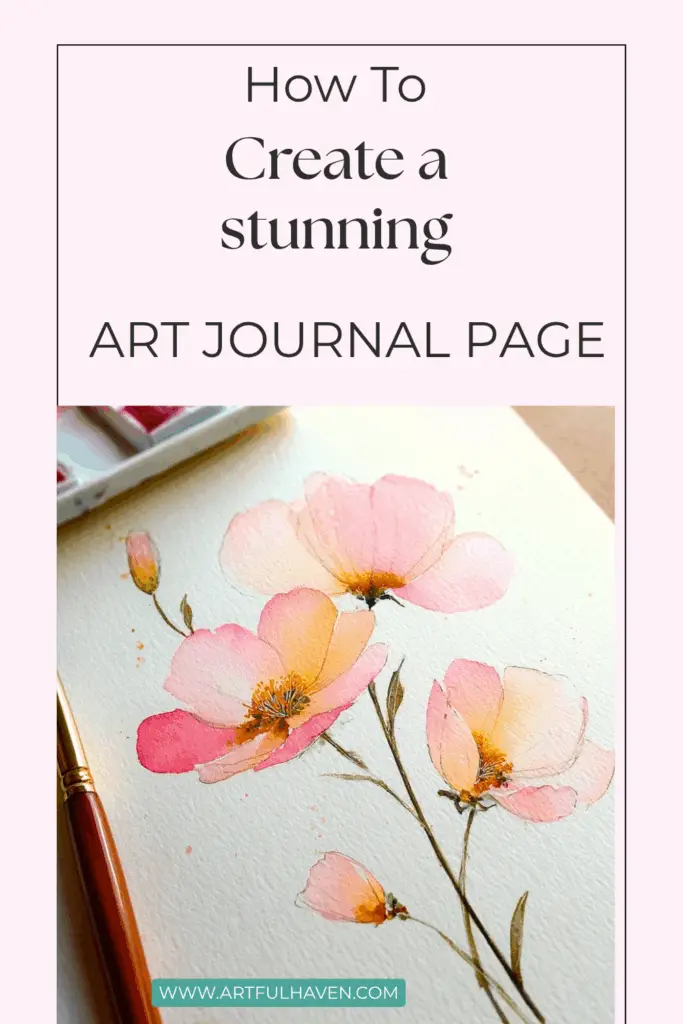
A spring art journal prompt is a creative suggestion or theme designed to inspire you to create a page in your art journal. Instead of staring at a blank page wondering what to draw or paint a prompt gives you a starting point, a creative challenge that invites exploration, experimentation, and personal expression.
Think of a prompt as an invitation to play. It’s not a rigid instruction or a test to pass. This is a gentle nudge that says: “What if you explored this idea? How would you interpret this theme?” The prompt is simply the spark; your unique artistic voice and imagination are what bring it to life.
So Explore, create, and celebrate your artistic journey this spring. I hope these prompts will inspire you like they inspire me!
Key Takeaways
- The article provides 50 Spring Art Journal Prompts to inspire creativity and expression during the season of renewal.
- Each prompt encourages exploration of themes like growth, transformation, and emotional wellbeing.
- Creative ideas and practical examples accompany each prompt, making art journaling accessible for all skill levels.
- Artists can use these prompts to celebrate spring and enhance their artistic journey.
- Finally, the article emphasizes that art journaling is about the process, not the final product.
Estimated reading time: 23 minutes
How to use art journal prompts
How to use these art prompts
- Choose Your Prompt
Browse through the 50 prompts and choose one that speaks to you. Don’t overthink it, your first instinct is usually the right one. It’s okay to skip prompts that don’t appeal to you. - Read the Creative Ideas
Explore the “Creative Ideas” section to spark your imagination. These are suggestions, not requirements. Feel free to combine ideas or create your own unique variation. - Review Practical Examples
Look at the practical examples for inspiration. Remember: these show one possible direction among infinite possibilities. Your interpretation is the correct one. - Gather Your Materials
Collect whatever art supplies you like. Start with supplies you already own such as watercolors, colored pencils, markers, collage materials, or even just pen and paper. There’s no need to buy anything special. - Create Without Judgment
This is the most important step. Give yourself permission to make “mistakes,” experiment with unexpected colors, use wobbly lines, and let the process unfold organically. Remember: the process matters more than the product. - Reflect (Optional)
After creating, spend a few minutes journaling about the experience. What surprised you? How did you feel? What did you discover? This reflection deepens the practice and creates a record of your creative journey.
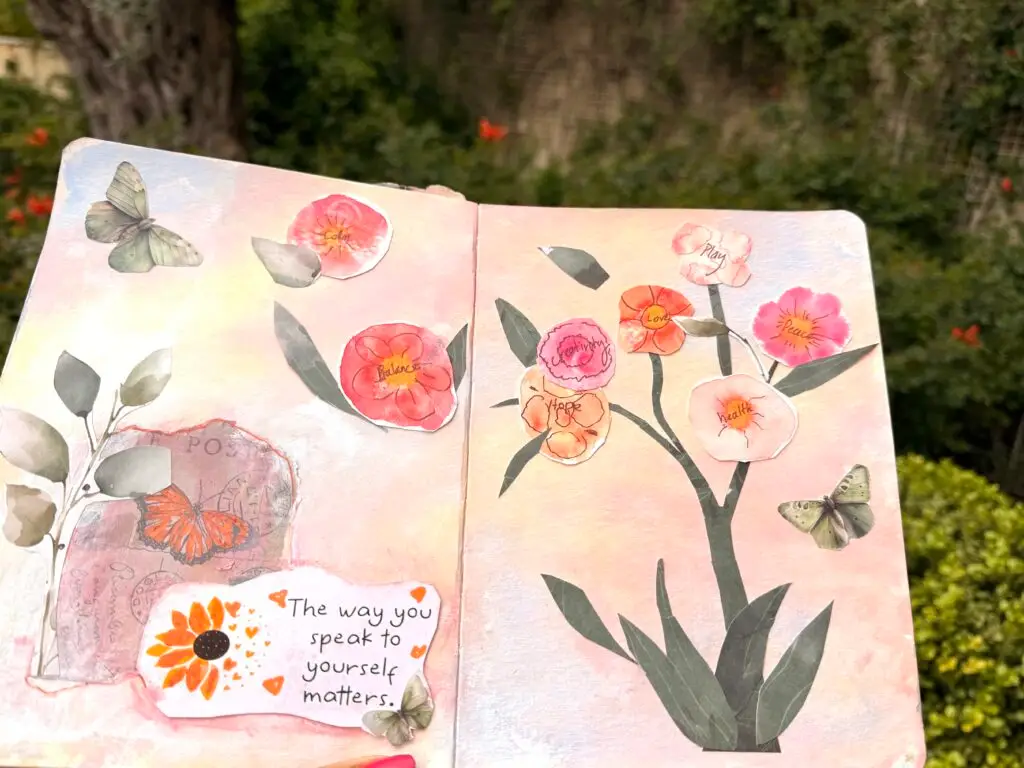
Why Spring Art Journal Prompts?
Spring is a season of renewal, growth, and transformation. It’s a time when nature awakens after winter’s rest, when new possibilities emerge, and when we often feel inspired to start fresh. Spring art journal prompts tap into this energy, offering themes and ideas that resonate with the season’s natural rhythms and emotional resonance.
These prompts celebrate new beginnings, growth and transformation, nature’s awakening, renewal and hope, creative play, and emotional wellbeing. Whether you’re a beginner or experienced artist, these prompts invite you to slow down, pay attention, and celebrate the season of renewal both in nature and within yourself.
Art Journal Prompts: Spring Beginnings and fresh Starts
Celebrate renewal and new growth with these prompts designed to help you embrace the energy of spring.
1- Paint or collage what ‘starting fresh’ looks like to you this season.
Creative Ideas
Create a visual metaphor using images of new growth (sprouting seeds and emerging butterflies). Layer torn paper in soft pastels to represent shedding old layers. Use collage to combine words like ‘begin,’ ‘renew,’ ‘bloom,’ and ‘hope.’
Practical Examples
Paint a figure stepping out of a cocoon surrounded by spring flowers.
Create a split page: one side showing winter (gray, bare) transitioning to spring (colorful, full).
Collage a door opening to reveal a garden bursting with color.
2- Create a page inspired by your favorite spring color. What does it make you feel?
Creative Ideas
Choose a single spring color (blush pink, soft green, sky blue, buttercup yellow) and explore its emotional resonance. Create an ombre effect using different tints and shades of your chosen color. Combine your color with complementary neutrals (cream, gray, white).
Practical Examples
If you love soft green: paint leaves, ferns, and grass in various green tones; add white space for breathing room.
If you love blush pink: layer tissue paper, add watercolor florals, write words about love and tenderness.
If you love sky blue: create a dreamy sky wash and add clouds, birds, or floating elements.
3-Draw or paint something blooming real or imagined.
Creative Ideas
Paint flowers from your garden or a favorite spring bouquet. Create blooms that don’t exist in nature (flowers with multiple layers, unusual color combinations). Draw flowers at different stages: bud, opening, full bloom, fading.
Practical Examples
Watercolor a cherry blossom branch with delicate pink petals.
Paint a whimsical flower with a face peeking out from the center.
Create a garden of impossible flowers: ones with geometric patterns, metallic centers, or unusual shapes.
4- Make a page that captures the feeling of opening a window after a long winter.
Creative Ideas
Paint the view from an actual window you’re opening. Create a window frame on your page with a spring scene visible through it. Use the contrast between inside (muted, closed) and outside (bright, open).
Practical Examples
Draw a window with frost or condensation, showing a blooming garden beyond.
Paint the moment light floods through an opening window.
Create a before/after: closed window (winter) on one side, open window (spring) on the other.
5-Write ‘what I’m planting this season’ and surround it with painted leaves and petals.
Creative Ideas
Think metaphorically: what are you ‘planting’ in your life? (Skills, relationships, habits, dreams). Create a garden of words, each representing something you’re cultivating. Use actual pressed flowers or leaves as inspiration for your painted botanicals.
Practical Examples
Write ‘I’m planting: confidence, creativity, kindness, patience’ surrounded by hand-painted ferns and flowers.
Create a seed packet with your intentions written inside.
Paint a garden scene with your goals as flowers blooming in the soil.
6-Illustrate a tiny moment of joy you noticed this week.
Creative Ideas
Zoom in on small, overlooked moments: a sunbeam on a cup of tea, a bird at the feeder, a child’s laugh. Use close-up framing to emphasize the intimacy of the moment. Combine illustration with journaling to capture the feeling.
Practical Examples
Paint a macro (close up) view of a dewdrop on a leaf. Illustrate a cat stretching in a patch of sunlight. Draw your favorite coffee mug with steam rising, surrounded by spring flowers.
7- Paint a whimsical spring landscape with no rules — just color and play.
Creative Ideas
Abandon realism; let colors and shapes guide you. Combine unexpected color combinations (purple trees, orange grass, pink sky). Use gestural, loose brushstrokes instead of careful detail.
Practical Examples
Create a landscape where flowers are as tall as trees.
Paint a spring scene with impossible perspectives (upside-down mountains, floating islands).
Use only 3-4 colors and see how many variations you can create.
8- Create a page dedicated to something new you want to try.
Creative Ideas
Illustrate the activity or skill you want to learn. Create a vision board for this new endeavor. Paint yourself successfully doing this new thing.
Practical Examples
Want to try gardening? Paint seeds, seedlings, and blooming flowers.
Want to learn a new art technique? Illustrate the tools and materials you’ll use or try to use a photo of an art the inspires you. And think how you can create something similar that is truly yours not a copy.
Want to take a tennis class? Paint yourself in that learning environment.
9-Use only soft, fresh colors. Let the palette guide the mood.
Creative Ideas
Limit your palette to pastels: soft pink, pale green, light blue, cream, pale yellow. Let the colors create the mood rather than planning the design first. Experiment with color mixing to create subtle variations.
Practical Examples
Create a monochromatic page using only soft greens.
Paint a landscape using only pastels, letting the colors suggest the scene.
Create an abstract composition that feels peaceful and restful.
You want to dive deeper into color check this
Basic Color Theory For Artists: Make Stunning Art Every Time
10- Collage a page that answers: what does hope look like right now?
Creative Ideas
Gather images, words, and textures that represent hope to you. Combine photographs, magazine clippings, and hand-painted elements. Create layers that build toward a hopeful image or message.
Practical Examples
Collage images of sunrise, growing plants, smiling faces, and inspiring words.
Create a vision of your ideal future using found images.
Combine personal photos with painted elements to create a hopeful narrative.
🎨 Creative Play & Technique Explorations
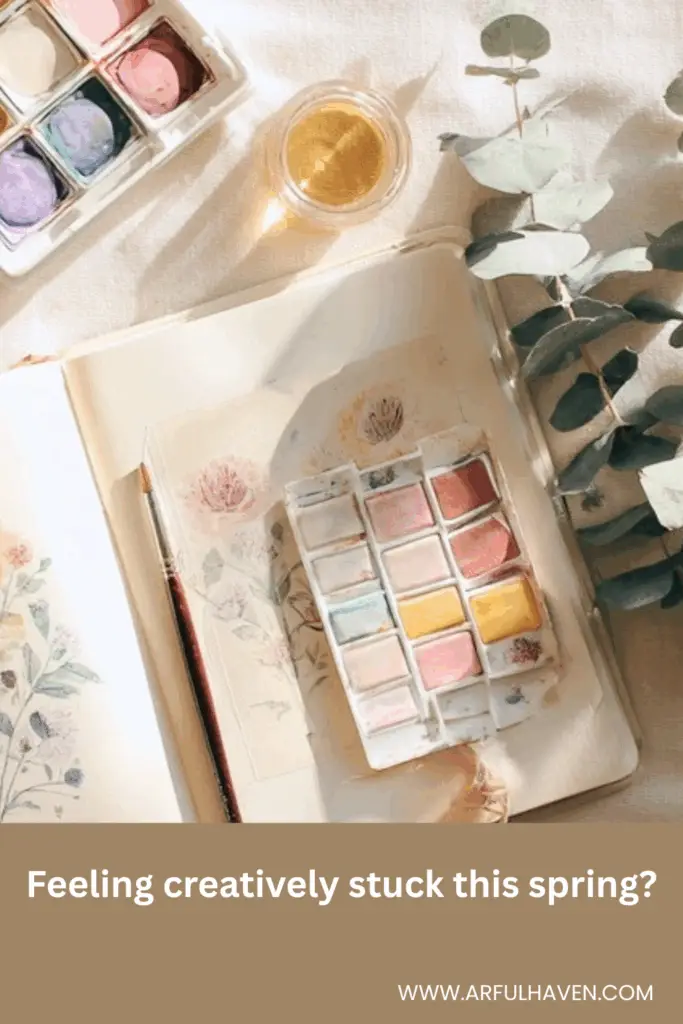
Expand your artistic skills with these technique focused prompts that encourage experimentation and playful exploration.
Try watercolor blooms loose and free. Perfection is not the goal!
Creative Ideas
Drop watercolor onto wet paper and let it bloom naturally tilt and move the paper to guide the paint. Combine multiple colors to create organic, flowing shapes. Embrace the unpredictability of the medium.
Practical Examples
Create a page of abstract watercolor blooms in various colors.
Paint flowers without outlines, using color and water to define shapes.
Experiment with color dropping and letting colors merge.
I recommend you check this article about color choices. This will help you create harmonious colors
Color Theory For Beginners: The Essential Guide To Creating Stunning Art
12- Paint a background using only a palette knife or old credit card.
Creative Ideas
Use unconventional tools to create interesting textures. Scrape, drag, and push paint across the page. Create abstract patterns and layers. Be generous with the paint.
Practical Examples
Drag a credit card through paint to create striped effects.
Use a palette knife to create bold, gestural marks.
Layer multiple colors using different tools.
Palette Knife Painting Ideas: Create Bold, Textured Art With These Inspiring Techniques
13- Layer tissue paper, paint, and handwriting to create a mixed media spring page.
Creative Ideas
Combine translucent tissue paper with watercolor washes. Write journal entries or poetry directly on the page. Build up layers to create depth and complexity.
Practical Examples
Paint a background, layer tissue paper, paint over it, then add handwritten reflections. (plan to leave some space for your writing since writing on textured paper is difficult)
Create a collage of tissue paper in spring colors with painted details on top.
Write a spring poem or a song about spring and illustrate it with layered tissue and paint.
14- Doodle a whimsical face with flowers growing from her hair.
Creative Ideas
Create a character that embodies spring. Let flowers replace or intertwine with hair. Add personality through facial features and expression.
Practical Examples
Draw a simple face with a peaceful expression and wildflowers sprouting from the head.
Create a profile view with flowers cascading down.
Paint a face surrounded by a halo of blooming flowers.
15- Try color mixing: how many shades of green can you make from what you have?
Creative Ideas
Experiment with primary colors to create greens or any other color you like. Mix green with other colors to create variations. Create a color mixing chart on your page.
Practical Examples
Mix blue + yellow to create bright green.
Mix green + red to create olive or muted green.
Mix green + white to create pale, soft green.
Mix green + brown to create earthy green.
You can repeat this technique with any other color.
16- Use a stamp (or make one from a sponge or a leaf) to create a repeat pattern.
Creative Ideas
Create a simple stamp design. Use it repeatedly to build a pattern. Vary the color or pressure for visual interest.
Practical Examples
Cut a sponge into a flower shape and stamp it repeatedly.
Create a geometric pattern using a simple stamp.
Combine multiple leaves and use them as stamps to create a complex pattern.
Here is some inspiration ideas
Nature Journaling With Flowers & Leaves: Simple DIY Techniques For Your Art Journal
17- practice painting water — a puddle, a raindrop, a river in spring.
Creative Ideas
Study how water reflects light. Experiment with transparency and reflection. Capture the movement and flow of water.
Practical Examples
Paint a puddle reflecting the sky and surrounding landscape. Create a close-up of a raindrop on a leaf. Paint a rushing spring river with rocks and flowing water. (you also can use photos it is your art journal! you get to do what you like)
18- Create a page using only three supplies you already own.
Creative Ideas
Challenge yourself with limitations. Combine unexpected supplies creatively. Discover new possibilities with familiar materials.
Practical Examples
Use only watercolor, pen, and paper.
Use only acrylic Pens, glue, and magazine clippings.
Use only acrylic, water, and a sponge.
19- Try a ‘wet on wet’ watercolor wash for a dreamy spring sky.
Creative Ideas
Create soft, blended colors in a sky. Let colors merge and flow naturally. Capture the dreamy quality of spring weather.
Practical Examples
Paint a sky transitioning from pale yellow to soft blue.
Create a sky with soft pink and lavender tones.
Paint a misty, atmospheric spring sky.
Pro tip: Wet into Wet is when you wet the paper a little before adding your watercolor. In this techniques the watercolor paint is the boss it moves as it wishes you can only guide a little and wait to see the unexpected beautiful result.
Want to learn more about watercolor check this out: How To Paint With Watercolor: A Beginner’s Guide To Watercolor Basics
20- Make a page that’s 80% background, 20% simple detail. Let the layers do the work.
Creative Ideas
Focus on creating a beautiful, complex background. Add minimal detail that lets the background shine. Use layering and texture to create depth.
Practical Examples
Create a textured, layered background with just a few simple flowers.
Paint an abstract background with one delicate line drawing on top.
Build up layers of washes with minimal detail added at the end.
🌿 Nature-Inspired Art Journal
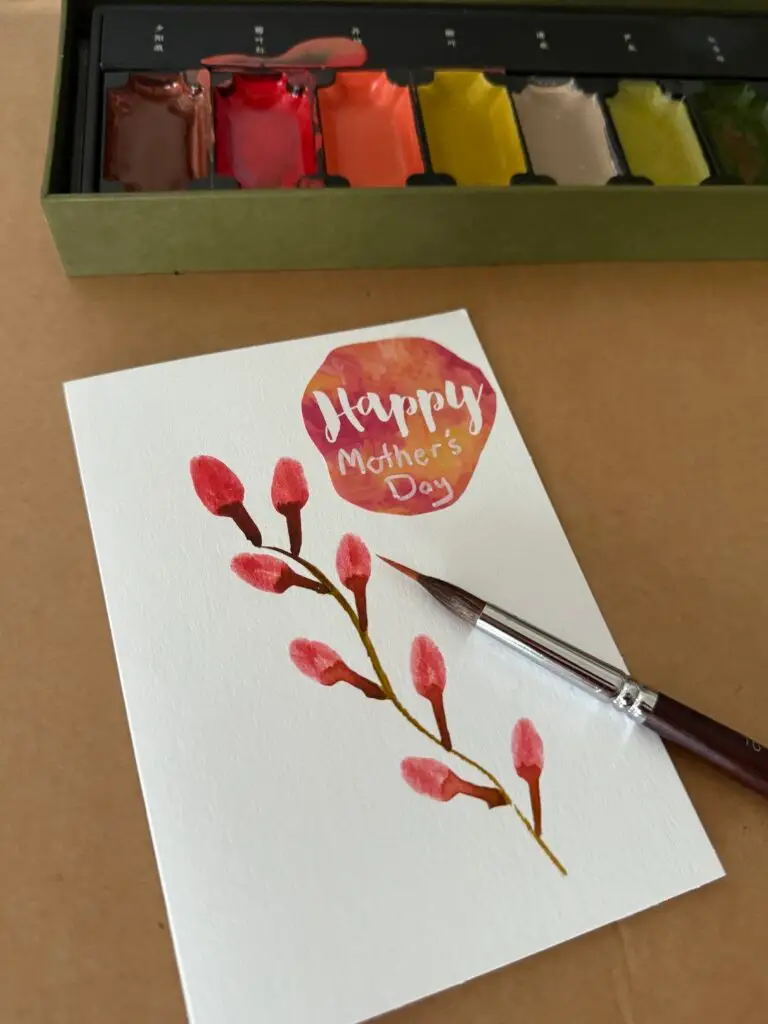
Draw inspiration from the natural world around you with these prompts celebrating spring’s botanical beauty.
21- Paint the view from your window Using collage.
Creative Ideas
Capture the feeling and mood of the view rather than exact details. Use magazine cut out and real dried flowers. Focus on what spring means to you.
Practical Examples
Paint a blurred garden view with soft, flowing shapes add dried flowers to it.
Create an imagined landscape of trees and sky using photos.
22-Illustrate your favorite spring flower with a fun, whimsical twist.
Creative Ideas
Take a real flower and reimagine it. Add unexpected elements (patterns, faces, unusual colors). Play with scale and proportion.
Practical Examples
Paint a tulip with geometric patterns inside the petals.
Draw a daisy with a smiling face in the center.
Create a cherry blossom with metallic accents and swirls.
23- Go outside, pick up a leaf or petal, and incorporate it into a journal page.
Creative Ideas
Use real nature as mixed media. Create a page around the natural element. Combine the real with the illustrated.
Practical Examples
Glue a pressed leaf and paint around it. Arrange petals on the page and paint a scene incorporating them. Create a collage with real and illustrated natural elements.
Here is some inspiration ideas
Nature Journaling With Flowers & Leaves: Simple DIY Techniques For Your Art Journal
24- Create a color palette inspired by a walk you took this week.
Creative Ideas
Observe the colors in nature during a walk. Document them in your journal. Create a page showcasing these colors.
Practical Examples
Take a walk and note the colors you see (sky, trees, flowers, earth). Create color swatches of these observed colors. Paint a landscape using only the colors from your walk.
25- Paint or draw a bird you spotted (or wish you had spotted!).
Creative Ideas
Paint a bird from observation or memory. Create a fantastical bird that doesn’t exist. Focus on capturing movement and personality.
Practical Examples
Paint a robin perched on a branch.
Draw a cardinal with bold red coloring.
Create a whimsical bird with impossible features.
26- Make a page inspired by the smell of rain on warm pavement.
Creative Ideas
Capture a sensory experience visually. Use colors and textures that evoke the feeling. Combine multiple sensory elements.
Practical Examples
Paint wet pavement with reflections of sky and trees.
Create a page with rain drops.
Use cool and warm colors to represent the temperature contrast.
27- Sketch a budding branch — use ink, pencil, or watercolor, your choice.
Creative Ideas
Focus on the delicate details of new growth. Capture the energy of spring awakening. Experiment with different media.
Practical Examples
Ink sketch of a branch with emerging buds. Watercolor painting of a flowering branch. Pencil drawing with fine detail of budding twigs.
28- Create a botanical-style spread of made-up plants and flowers.
Creative Ideas
Invent plants that don’t exist in nature. Use botanical illustration style. Create a field guide to imaginary flora.
Practical Examples
Design a two-page spread with 6-8 imaginary plants.
Create detailed botanical drawings with labels.
Combine realistic botanical style with fantastical elements or simply fill your page with spring doodles.
29- Make a page that answers: what does your neighborhood look like in spring?
Creative Ideas
Illustrate your local environment coming alive in spring. Include specific landmarks or features from your area. Capture the unique character of your neighborhood.
Practical Examples
Paint the street where you live with spring flowers and trees.
Illustrate local parks or green spaces in bloom.
Create a map-like view of your neighborhood in spring.
30- Paint a spring garden scene entirely in one color family.
Creative Ideas
Choose a color family (greens, blues, pinks, yellows). Use tints, shades, and tones of that color. Create depth and interest through color variation alone.
Practical Examples
Paint a garden using only greens (light, medium, dark).
Create a spring scene using only soft pinks and blush tones.
Paint a landscape using only blues and teals.
💛 Emotional Wellbeing & Creative Self-Care
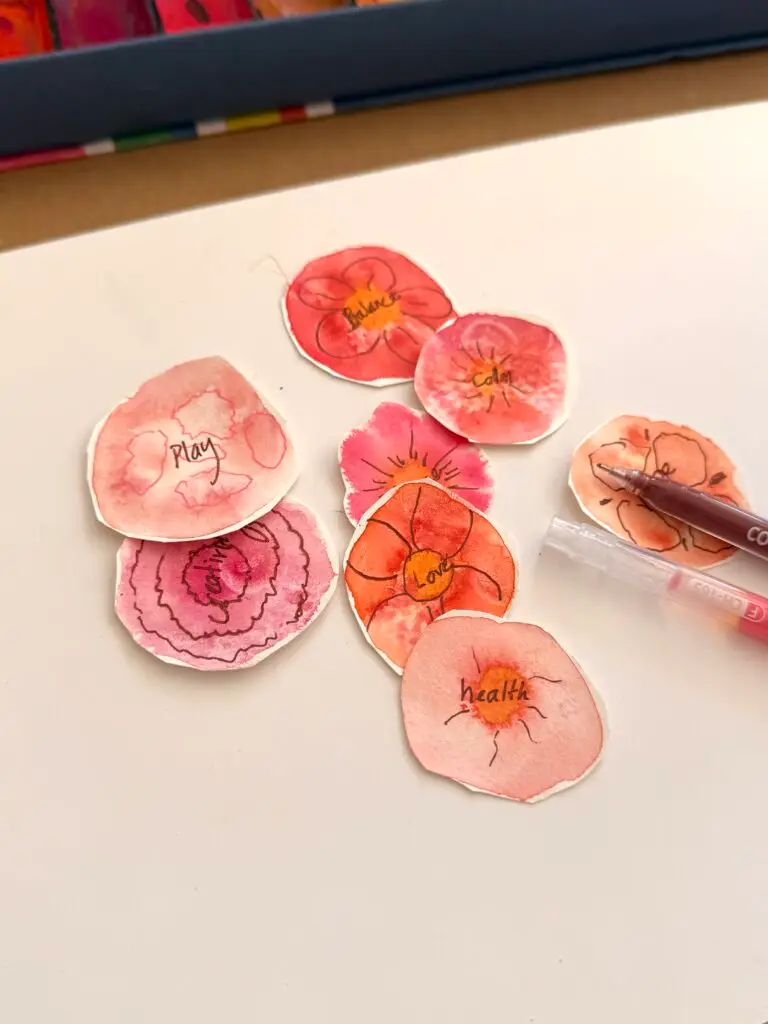
Use art journaling as a tool for healing, reflection, and self-compassion with these mindful prompts.
31- Paint a page that represents how you’ve grown over the last year.
Creative Ideas
Visualize personal growth and transformation. Use metaphors of nature (seeds growing, butterflies emerging, trees expanding). Reflect on challenges overcome and lessons learned.
Practical Examples
Paint a tree growing taller and fuller. Create a butterfly emerging from a cocoon. Illustrate a journey from one place to another.
32-Write yourself a gentle love note and decorate it with soft watercolor washes.
Creative Ideas
Practice self-compassion through writing. Create a page that feels nurturing and kind. Combine words and art to reinforce the message.
Practical Examples
Write affirmations or loving words to yourself. Decorate with soft watercolor backgrounds. Add gentle illustrations (flowers, hearts, peaceful imagery).
33- Create a page for something you’re ready to let go of.
Creative Ideas
Use art as a tool for release and healing. Visualize letting go of what no longer serves you. Create a page that feels freeing.
Practical Examples
Paint something fading or dissolving. Create an image of release (bird flying away, leaves falling). Use dark colors transforming to light.
Creative And Powerful Self-Reflection Project With Mixed Media Art Journaling
34- illustrate something that made you laugh this week.
Creative Ideas
Capture a moment of joy and humor. Use playful, lighthearted imagery. Celebrate the lighter moments in life.
Practical Examples
Illustrate a funny pet moment.
Draw a silly situation or conversation.
Paint a moment of unexpected joy or absurdity.
35- Paint your mood today — no words needed, just color and mark-making.
Creative Ideas
Express emotions through color and gesture. Use abstract mark-making to convey feeling. Let your intuition guide your choices.
Practical Examples
Happy mood: bright, warm colors with flowing, energetic marks.
Peaceful mood: soft, cool colors with gentle, flowing lines.
Contemplative mood: muted colors with thoughtful, deliberate marks.
36- Make a page full of tiny things that bring you comfort.
Creative Ideas
Create a visual collection of comfort items. Include both objects and experiences. Build a page that feels warm and nurturing.
Practical Examples
Doodle a cozy collection: tea cup, blanket, book, candle, plant, cat. Paint small scenes of comfort (reading, gardening, baking). Create a comfort collage with words and images.
37- Create a gratitude spread: 5 things, beautifully decorated.
Creative Ideas
Reflect on things you’re grateful for. Create a visually beautiful page celebrating gratitude. Use illustration, photos and lettering to enhance the message.
Practical Examples
List 5 things you’re grateful for, each with its own illustrated decoration.
Create a mandala-like design with gratitude words radiating outward.
Paint 5 small scenes representing things you’re grateful for.
38- What does ‘enough’ look like to you? Make a page about it.
Creative Ideas
Explore your personal definition of sufficiency and contentment. Visualize what ‘enough’ means in your life. Create a page that feels peaceful and satisfied.
Practical Examples
Paint a scene of simple contentment (a quiet room, a peaceful garden).
Illustrate the things that make you feel you have ‘enough’.
Create a page with the word ‘enough’ surrounded by symbols of contentment.
40-Paint something soft for a day when everything feels too loud.
Creative Ideas
Create a calming, soothing page. Use soft colors, gentle lines, and peaceful imagery. Design something that feels like a refuge.
Practical Examples
Paint a peaceful landscape with soft colors. Create an abstract page with gentle, flowing marks. Illustrate a quiet, comfortable space.
✨ Storytelling & Whimsical Character Prompts
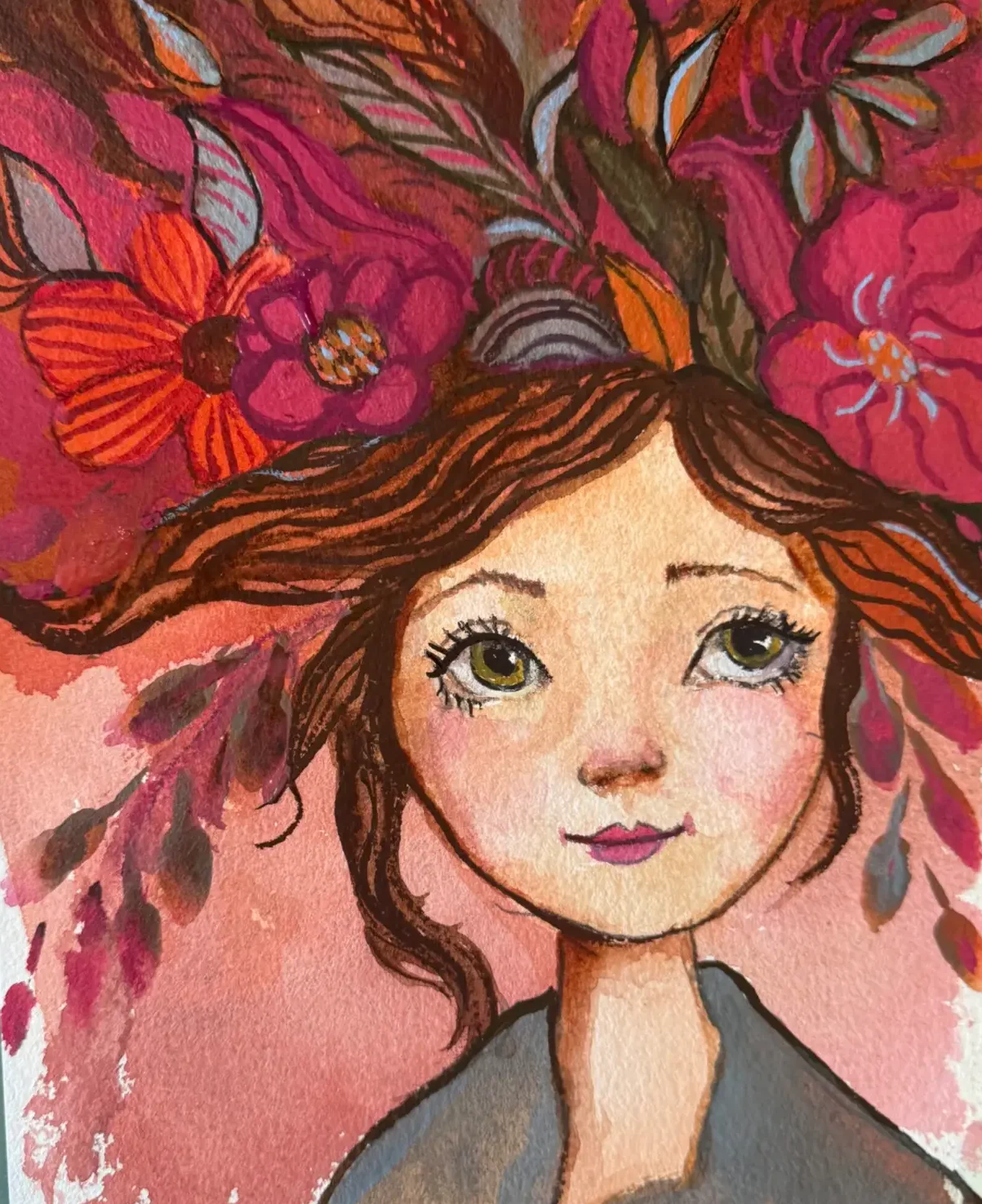
Bring characters and stories to life through whimsical illustrations and imaginative narratives.
41- Draw a whimsical spring fairy or goddess. Give her a name.
Creative Ideas
Create a character that embodies spring energy. Give her distinctive features and personality. Develop her story and background.
Practical Examples
Paint a fairy with butterfly wings and a flower crown. Draw a goddess surrounded by blooming flowers. Create a character with spring elements (flowers, vines, light) integrated into her design.
42- Illustrate a tiny cottage garden scene with a character peeking out the window.
Creative Ideas
Create a cozy, intimate scene. Focus on details and atmosphere. Tell a story through the illustration.
Practical Examples
Paint a cottage with a character framed in the window, surrounded by a garden. Create a close-up of the window with the character visible inside. Illustrate the cottage garden with the character as a small detail.
43- Create a page about a made-up spring festival in a magical village.
Creative Ideas
Invent a festival with unique traditions. Describe the setting, activities, and atmosphere. Combine illustration and journaling.
Practical Examples
Create a festival celebrating the first flowers of spring. Design a festival with magical elements (floating lanterns, enchanted music). Illustrate festival scenes with journaled descriptions.
44- Draw a girl surrounded by the things she loves most in spring.
Creative Ideas
Create a portrait surrounded by meaningful objects. Use the surrounding elements to tell her story. Combine portraiture with still life.
Practical Examples
Paint a girl surrounded by flowers, a book, a cup of tea, and a bird. Draw a character with spring elements (flowers, butterflies, sunshine) around her. Create a detailed illustration showing what brings her joy.
How To Draw Whimsical Faces For Every Season: A Step-By-Step Guide For Winter, Spring, Summer & Fall
45- Draw a scene: ‘the first warm morning.‘
Creative Ideas
Capture the feeling of the first warm day of spring. Show the transition from cold to warmth. Convey the joy and relief of the season changing.
Practical Examples
Paint someone stepping outside into warm sunlight. Illustrate a scene with people shedding winter layers. Create an image of nature awakening to warmth.
How To Draw Whimsical Dolls: Step-By-Step Guide For Beginners
46- Create a whimsical bird with an oversized, beautiful tail.
Creative Ideas
Design an imaginary bird with an exaggerated feature. Focus on the beauty and detail of the tail. Create a character with personality.
Practical Examples
Paint a bird with a tail of flowing ribbons or feathers. Draw a bird with a tail made of flowers or leaves. Create a bird with a tail featuring patterns and colors.
47- Draw a character who collects flowers and roses in little glass jars.
Creative Ideas
Create a character with a unique, whimsical hobby. Tell her story through the illustration or collage. Show her collection and passion.
Practical Examples
Paint a girl surrounded by jars of flowers and roses, each labeled with the date.
48- Paint a scene where flowers are the main characters.
Creative Ideas
Anthropomorphize flowers, giving them personalities. Create a narrative or scene featuring flowers as protagonists. Use flower characteristics to suggest character and emotion.
Practical Examples
Paint flowers having a conversation or gathering. Create a scene of flowers celebrating or dancing together. Illustrate flowers on an adventure or journey.
49- Illustrate a recipe for spring — what ingredients would it include?
Creative Ideas
Create a whimsical recipe combining spring elements. Use both literal and metaphorical ingredients. Combine illustration with journaling.
Practical Examples
Recipe ingredients: 1 cup of warm sunshine, 2 tablespoons of hope, fresh flowers, birdsong, new growth. Illustrated recipe card with spring ingredients and instructions. Decorative page showing the ‘recipe for spring’.
50- Create a ‘wanted poster’ for your inner creative — give her the credit she deserves.
Creative Ideas
Celebrate your creative self with humor and appreciation. Create a formal ‘wanted’ poster design. Highlight the qualities and accomplishments of your inner artist.
Practical Examples
Design a wanted poster featuring your creative self. List her ‘crimes’ (creating beauty, spreading joy, taking risks). Illustrate her with a playful, celebratory tone.
Your Creative Journey Starts Here
Art journaling is about the process, not the product. These 50 prompts are your permission slip for spring. So whether you work through one a week, do three in an afternoon, or save this list for a rainy Saturday, I hope it brings you joy, a little color, and the gentle reminder that you are already an artist.
Happy creating! 🌿
— Salwa
Artful Haven
Other related articles you might want to check out
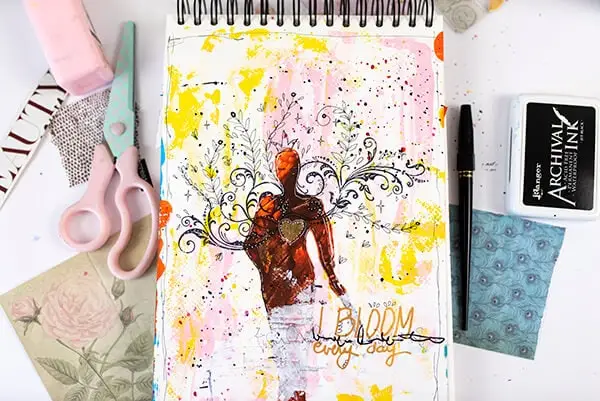
10 Creative Spring Art Journal Prompts To Inspire Meaningful Art
If you love spring, you’re going to enjoy these spring art journal prompts. They’ll guide you to be more mindful about the season and all it brings while making wonderful, meaningful art.
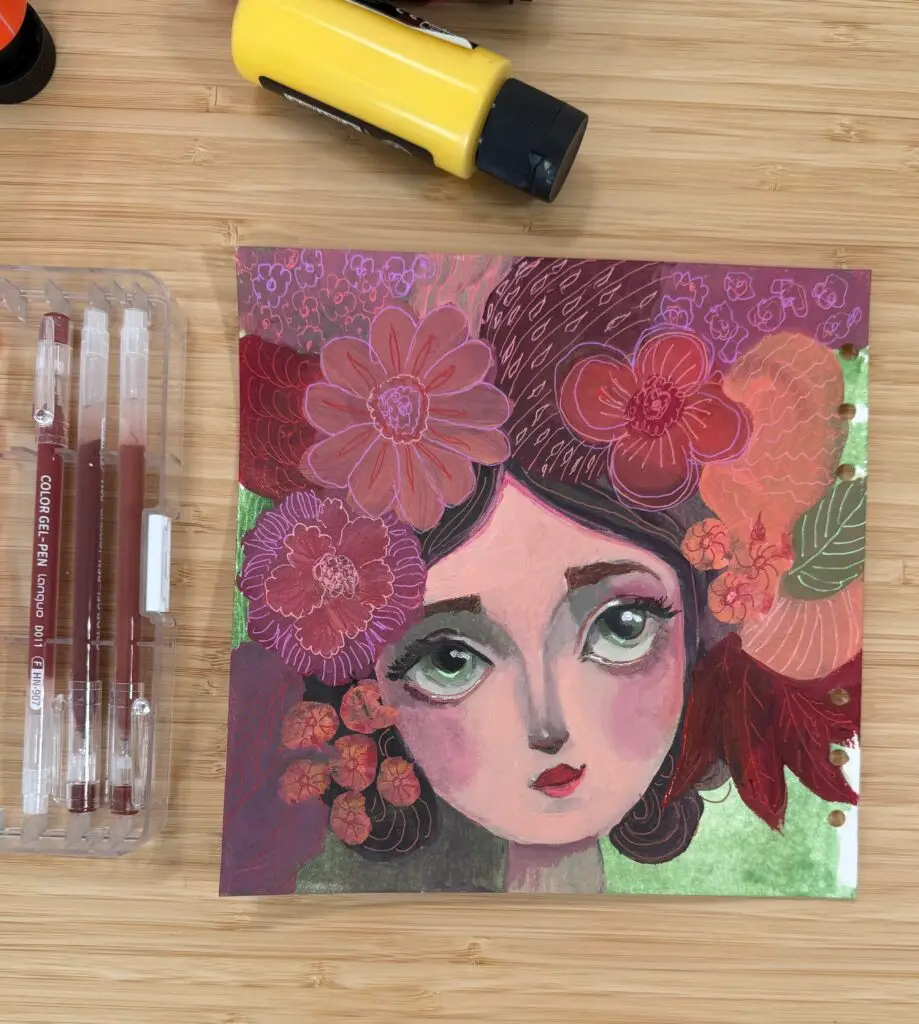
How To Draw Whimsical Faces For Every Season: A Step-By-Step Guide For Winter, Spring, Summer & Fall
If you love drawing whimsical faces but feel stuck always doing the same look, this tutorial is going to feel like a fresh cup of inspiration. In this guide on how to draw whimsical faces for every season: step-by-step guide, we’ll start with a simple, beginner-friendly way to draw a whimsical face, and then transform it into four…
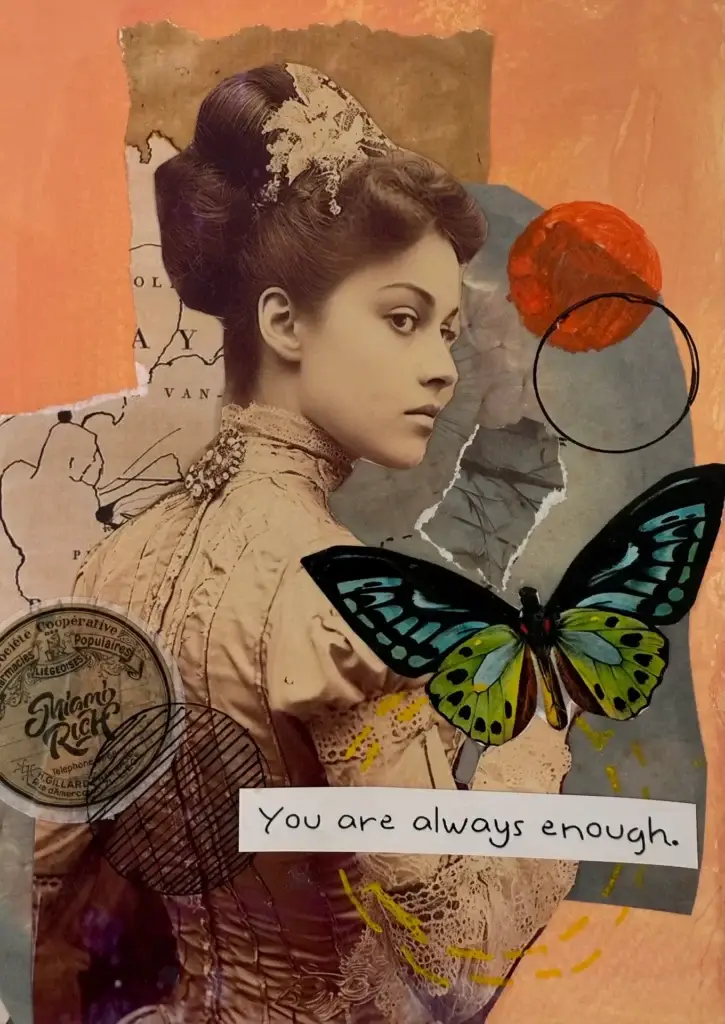
7 Easy Art Journal Backgrounds For Beginners (No Experience Needed)
You’ve stared at a blank page. You’ve picked up a brush, put it back down, and told yourself you’ll start tomorrow. Sound familiar? I’ve been there many times.
Here’s the thing — the background is the most important part of any art journal page. It sets the mood, gives you something to work on top of, and (best of all) it gives you a reason to actually start.