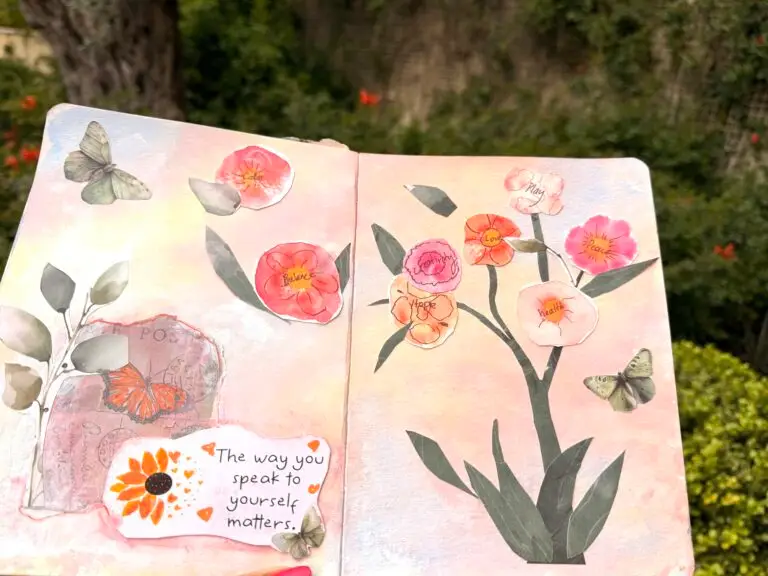
56 Summer Art Journal Prompts
Some days the blank page is exciting. Other days it just sits there, daring you. That’s what a prompt is for. It is not a rule to follow, just a little nudge that says, start here.
Here are 56 summer prompts that turn fleeting moments into pages worth keeping.
How to use these summer prompts
Nature and Observation
Summer is the season where we soak in long light, heat, spontaneous road trips, and flavorful fruits. But without a system to catch it, summer just becomes another blur of photos you scroll past and forget. So here are some ideas that will for sure keep the memories alive for a long time.
1-Press Wildflowers You Find on a Walk
Most people walk past the same plants every day and never see them. Pressing wildflowers forces observation at a different speed. You start noticing color variation, petal structure, stem thickness, and the micro-ecosystems growing in cracks and curbs. I encourage you to go out this summer and observe the different wild flowers around you.
Quick tip: Use wax paper and heavy books. Let flowers dry for at least a week before gluing them into your journal to prevent mold and color bleed.
The magic happens when you return to the same walking route. You begin recognizing plants by their bloom cycles, tracking which ones appear early and which ones last into fall. Your awareness shifts from passive observation to active documentation.
Attach the dried flower to a page with a glue stick or clear tape. Write the date, location, how you felt, what did you smell, and the weather conditions next to it. Over the course of a summer, this becomes a visual timeline of your environment that no photo can replicate.
Want to explore more ideas on how to use nature in your art journal, check this Nature Journaling With Flowers & Leaves: Simple DIY Techniques For Your Art Journal
2- Paint the Same Object at Different Times of Day
Choose a simple object that stays in the same place like a tree outside your window, a favorite chair, a garden pot, a building across the street, or even a vase of flowers on your table.
Now paint or sketch that same subject at different times of the day. Try it early in the morning, at midday, in the golden glow of late afternoon, and again as evening approaches.
Pay attention to how the light changes everything. Notice how shadows grow longer, colors become warmer or cooler, and details appear or disappear depending on where the sun is shining. The object itself hasn’t changed, but your experience of it has.
This is the same idea that fascinated the French Impressionist Claude Monet. He famously painted the same subjects such as haystacks, poplar trees, and even the façade of Rouen Cathedral. He painted them over and over again to capture how light transformed them throughout the day and across the seasons.
Don’t worry about creating perfect paintings. Each study can be quick and simple. Your goal is to observe, compare, and discover. Date each sketch or painting and make a few notes about the light, weather, or colors you noticed.
By the end of the exercise, you’ll have a beautiful collection that reveals something remarkable: the world is never quite the same from one moment to the next.
3- Create a Color Palette from a Sunset
Sit with the sunset for ten minutes and paint or color the spectrum as it shifts in real time.
Grab watercolors, colored pencils, or markers. Divide a page into rectangles or organic shapes. Fill each section with a color you see in the sky. Don’t aim for photorealism. Aim for emotional accuracy.
This exercise trains your eye to distinguish between peach and coral, between violet and deep blue, between the gold at the horizon and the pale yellow overhead. You start seeing color as a gradient instead of a fixed thing.
4- Document One Insect in Detail
Insects are everywhere in summer, and most of us treat them like background noise. Drawing one up close changes that. You start noticing wing transparency, segmented legs, antenna curves, and patterns that look like modern art.
Pick an insect you can observe safely. A butterfly on a flower. A beetle on a leaf. A dragonfly near water. Spend five minutes watching it before you draw. You can imagine and invent patterns and colors. Or you can create an art journal page inspired by any of these insects. You can draw the insect or get a photo and transfer it to the page. let the page lead the way.
5- Print with Summer Leaves
Summer leaves are full of beautiful textures and intricate vein patterns just waiting to be discovered.
Collect a few leaves from your garden or a summer walk then turn a leaf over and apply a thin layer of acrylic paint to the veiny side. You know, the side where the texture is most prominent but be careful not to use too much paint, as a light coat will reveal more of the leaf’s delicate details. Then carefully place the painted leaf onto your journal page and gently press it down with your fingers or a brayer. Finally when you lift the leaf away, it will leave behind a detailed print that captures the beautiful structure of the leaf.
Experiment with different leaf shapes, sizes, and paint colors. Layer multiple prints to create interesting backgrounds, borders, or focal points.
Look closely at the patterns that appear. Could a print become the wings of a butterfly? The petals of a flower? The dress of a whimsical doll? The flowing hair of a whimsical face? Let the natural shapes inspire your imagination.
Don’t worry about creating perfect impressions. Some of the most beautiful prints come from imperfect edges, overlapping layers, and unexpected textures.
This page becomes a celebration of nature’s artistry, transforming ordinary summer leaves into unique patterns and creative possibilities.
Memory and experience
Summer is built from moments that feel small in real time but become but a real treasure later on in life. These prompts help you capture experiences before they fade.
6- Illustrate Your Favorite Summer Meal
Food is sensory memory. The smell of grilled corn, the tang of lemonade, the mess of a ripe peach. Drawing what you ate anchors you in a specific time and place in a way that words alone can’t.
Sketch the plate, add color, Write the recipe or the person who made it, or describe the setting. Was it a picnic table? A back porch? A kitchen counter at midnight?
This works because: Food drawings don’t need to be pretty. They need to be personal. A messy watermelon slice with juice running down the page says more than a polished illustration ever could.
Over time, your journal becomes a summer cookbook of meals tied to people, weather, and moods.
7- Map a Day at the Beach or Lake
A map isn’t just geography. It’s a record of where you sat, what you saw, and how you moved through space. Drawing a map of your beach day turns a generic location into your specific experience.
Mark where you set up your towel. Draw the waterline. Add the pier, the lifeguard stand, the ice cream truck. Use symbols for seagulls, umbrellas, sandcastles, people.
Pro move: Add time stamps to different areas of the map to show how you moved throughout the day. “10 a.m. arrived.” “Noon, shade break.” “3 p.m., last swim.”
This exercise trains spatial memory. When you revisit the page months later, you won’t just remember the beach. You’ll remember the exact rhythm of that day.
8- Collage Ticket Stubs and Receipts from Summer Outings
Ephemera tells the story of what you actually did, not what you planned to do. Ticket stubs, receipts, wristbands, and napkins are throwaway objects that become artifacts when you archive them intentionally.
Glue them directly into your journal. Write the date and a one-sentence memory next to each one. Over time, this becomes a scrapbook of micro-adventures.
What makes this powerful: It removes the pressure to create. You’re curating, not drawing. But the act of choosing what to save and where to place it is creative in itself.
Layer items on top of each other. Let edges stick out. Add doodles or paint around them to tie the page together visually.
9-Capture the Sounds of a Summer Night
Sound is one of the hardest things to preserve, but it’s one of the most evocative. Crickets. Fireworks. Distant music. A screen door slamming. Ice clinking in a glass of water.
You can’t record sound on paper, but you can translate it visually. Use words, shapes, colors, or abstract marks to represent what you hear.
Write “cicada hum” in repeating spirals. Draw fireworks as explosive bursts of color. Use jagged lines for laughter, smooth curves for wind chimes.
This makes you listen differently. Instead of tuning out background noise, you start cataloging it. Your journal becomes a sensory archive, not just a visual one.
10- paint the view from you window at different times of the day
Your window view is the most overlooked subject in your life. You see it every day and register almost nothing. Painting it at morning, noon, and night forces you to notice light, shadow, and activity patterns and colors.
Use the same composition each time. Change only the details. Morning might show mist and empty streets. Noon might be harsh light and movement. Night might be porch lights and stillness.
Here’s why this works: Repetition removes decision fatigue. You’re not choosing what to draw. You’re choosing when to look.
11- Dreaming of Summer Adventures
If you could travel anywhere this summer, where would you go?
Create a journal page inspired by a destination you dream of visiting. It could be the lavender fields of France, the beaches of Greece, the colorful streets of Italy, the markets of Morocco, or a cozy cottage in the countryside.
Draw or collage images of places you would love to explore. Add maps, flowers, landmarks, foods, or colors that remind you of your dream destination.
This page becomes a vision board for your next adventure and a celebration of the places that inspire your imagination.
By the end of summer, you’ll have a visual record of how your environment shifts, and you’ll understand your own space in a completely new way.
12- A Summer Journey Remembered
Capture a summer trip you’ve taken, whether it was a weekend getaway, a family vacation, or a day spent exploring somewhere new.
Fill your page with memories from the experience. Include sketches, photos, tickets, receipts, pressed flowers, or small details you noticed along the way. Perhaps it was a beautiful beach, a charming café, a mountain view, or a special meal shared with loved ones.
Write down a favorite memory or something that made you smile during the journey.
This page becomes a keepsake of your summer adventure and a reminder of the moments that made it special.
If you would like more ideas about travel journal check this How To Keep A Travel Art Journal (With Tips, Ideas, And Writing Prompts)
Emotion and reflection
Summer has a mood that’s hard to name. These prompts help you process what you’re feeling without forcing words.
13- Paint How the Heat Feels
Heat isn’t just temperature. It’s weight, it’s slowness, it’s sticky skin and melted ice cream. Painting the sensation of heat gives you permission to work abstractly.
Use reds, oranges, yellows. Add texture with thick paint or layered crayon. Let colors bleed together. Don’t aim for representational art. Aim for immediate response.
Try this: Work fast. Don’t plan. Let your hand move in response to how your body feels in the moment. The result will be raw and honest.
This exercise bypasses the intellectual brain and taps into physical memory. When you look at the page later, you won’t just remember summer was hot. You’ll remember how it felt on your skin.
14- Illustrate a Summer Daydream
Daydreams are fleeting, but they reveal what you’re longing for. Maybe it’s lying in a hammock. Maybe it’s diving into cold water. Maybe it’s a version of your life that feels just out of reach.
Draw the daydream as if it’s already real. Use bright colors. Add details. Don’t censor yourself.
Why this matters: Daydreams aren’t distractions. They’re desires your subconscious is trying to communicate. Putting them on paper makes them tangible, and sometimes that’s the first step toward making them happen.
Write a few sentences about why this daydream keeps showing up. What need is it pointing to? What feeling is it chasing?
15- Create a Page About a Perfect Lazy Day
Lazy days are underrated. Society tells you to be productive, but summer is built for slowness. Documenting a day where you did very little is an act of resistance.
Write what you did in list form or as a timeline. Draw the couch you sat on. Paint the book you read. Add the snack you ate three times.
The goal is not to justify the day. The goal is to honor it. To say, “This mattered. This was enough.”
Use soft colors. Let the page feel unhurried. Let it breathe.
16- Express the Feeling of Jumping into Cold Water
That shock of cold is one of summer’s most electric moments. It’s jarring and exhilarating and over in seconds. Capturing it requires movement and contrast.
Use blues and whites. Add jagged lines or explosive shapes. Write words like “cold,” “shock,” “alive”.
This works because: The page becomes a physical echo of a physical sensation. It’s not about accuracy. It’s about energy.
Revisit this page on a slow winter day. The contrast will hit different.
17- a shared summer memory
Think back to a summer moment you shared with someone special. It could be a family gathering, a picnic with friends, a day at the beach, a long conversation on a warm evening, or even a simple moment that made you smile.
Fill your page with pieces of that memory. Sketch the people, places, or objects that stand out. Add colors, words, photos, tickets, pressed flowers, or any small details that help bring the moment back to life.
As you create, reflect on what made this memory meaningful. What did you see, hear, smell, or feel? What made the moment memorable?
This page becomes a celebration of connection, reminding you that some of life’s most treasured moments are often the simplest ones shared with others.
Play and Experimentation
These prompts prioritize process over product. They’re designed to get you unstuck and remind you that art journals are playgrounds, not galleries.
18-Fill a Page with Only Circles Inspired by Summer
Circles are sun, bubbles, watermelon slices, beach balls, frisbees, sunglasses lenses, plate edges, bike wheels. When you limit yourself to one shape, you start finding it everywhere.
Draw circles of different sizes. Fill some with color. Leave others as outlines. Overlap them. Let them bleed off the page.
Why constraints work: if you’ve been around here for a while you know how much I believe in constraints to unleash creativity. They remove decision paralysis. You’re not choosing what to draw. You’re choosing how to interpret the same shape over and over.
This exercise is meditative. It requires no planning and no skill. Just repetition and variation.
19- Use Only Three Colors for an Entire Spread
Color restrictions force creativity. When you can’t rely on a full palette, you have to think about contrast, layering, and negative space in new ways.
Pick three colors that feel like summer to you. Maybe it’s turquoise, coral, and cream. Maybe it’s yellow, green, and brown. Try to stick to using only those three for two full pages.
Quick win: This makes your spread feel like they belong together without requiring advanced design skills.
Over time, you develop an eye for how limited palettes create mood and unity across an entire journal.
Draw, paint, collage, write. Let the colors repeat and interact. The constraint becomes the style.
20- Tear Paper into Shapes and Glue Them as a Summer Scene
Torn paper has texture that scissors can’t replicate. It’s rough, organic, and unpredictable. Building a scene from torn shapes removes the pressure of precision.
Rip blue paper for sky or water. Yellow for sun. Green for grass or trees. Don’t measure. Don’t plan. Just tear and arrange.
Why this works: You’re working with your hands in a way that feels more like play than art.
Glue the shapes down. Add details with pen or paint if you want, but you don’t have to. The scene works because of the texture, not the accuracy.
21- Create a Page Using Only Your Non-Dominant Hand
Your dominant hand has habits. It knows how to make lines look “right.” Your non-dominant hand doesn’t care. It produces wobbly, unexpected, childlike marks that feel fresh.
Switch hands and draw anything. A flower. A face. A pattern. Let it be messy. Let it be weird.
What this teaches: Perfection is a trap. Looseness is freedom. Some of the most interesting pages in your journal will be the ones where you had the least control.
This exercise breaks the cycle of self-criticism and reminds you that the point is to make marks, not masterpieces.
22- Make a salt-texture page to mimic sand or sea spray.
Sprinkle salt onto a wet wash and let it dry. Salt pulls pigment into starry, sandy textures. Try blues for water, golds for sand.
A sandy beach texture using salt on warm ochre.
A starry night sky with salt on deep blue.
Gratitude and presence
These prompts ground you in the present and help you notice what’s working, even on hard days.
23- List 20 Small Summer Joys on a Single Page
Small joys are easy to forget. Writing them down or doodle them. Twenty feels like a lot until you start listing, and then it feels too short.
Ice cream cone, The first bite of watermelon. cold lemonade. Wet dog after a swim. Lightning bugs.
Why twenty? The first ten come easy. The second ten require you to dig deeper, and that’s where the good stuff lives.
Write them as a list or doodle them and scatter them across the page.
24- Draw Your Favorite Summer Outfit
What you wear in summer says something about how you want to feel. Documenting an outfit is a form of self-portrait without the pressure of drawing your face.
Sketch the shorts, the tank top, the sandals, the sunglasses. Add color. Write why you love it.
This works because clothes hold memory. That dress reminds you of the concert. Those shoes remind you of the boardwalk. The page becomes a time capsule of how you moved through the world.
Years from now, you’ll look at this and remember not just what you wore, but who you were.
25- Capture the Glow of String Lights at Night
String lights are summer magic. They turn porches into stages and backyards into rooms. Painting them teaches you to work with light as a subject.
Use warm yellows and oranges against a dark background. Let the bulbs glow. Add soft halos around each one.
Pro tip: Don’t paint the wires first. Paint the lights, then connect them. It keeps the focus on the glow, not the structure.
This page will feel cozy and nostalgic every time you revisit it, even in the middle of winter.
26- Illustrate a Moment You Want to Remember Forever
Not every moment announces itself as significant. Sometimes the ones worth keeping are quiet. A conversation on a porch. A shared look across a table. The way someone laughed at something you said.
Draw the setting. Write the dialogue if there was any. Add sensory details. What did the air feel like? What were you drinking? What time was it?
Memory fades fast. This page locks it in place before the details blur.
You don’t need to explain why it mattered. Just that it did.
27- Paint the Best Part of Your Week in Abstract Form
Sometimes the best moments don’t have a clear image. They’re a feeling, a shift, a lightness you can’t name. Abstract painting gives you a way to capture that without forcing it into a recognizable shape.
Choose colors that match the feeling. Move your brush without a plan. Let shapes emerge.
This is emotional honesty in visual form. You’re not trying to communicate to anyone else. You’re trying to make the feeling visible to yourself.
The page might not make sense to anyone but you, and that’s exactly the point.
Challenge and skill building
These prompts push you slightly outside your comfort zone and help you develop techniques that carry over into other pages.
28- Draw Every Plant in Your Yard or on Your Block
This is a long game prompt. You’re not doing it in one sitting. You’re committing to drawing every distinct plant you can find in a defined area.
Start with trees, then shrubs, then ground cover, then weeds. Draw each one on its own section of the page or across multiple spreads.
Why this builds skill: Repetition makes you faster and more confident. By plant twenty, you’ll notice your lines are looser and more intuitive than they were at plant three.
Label each drawing with the plant name if you know it, or a description if you don’t. This becomes a personal field guide to your immediate environment.
29- Create a Border Using Repeated Summer Motifs
Borders frame a page and make it feel intentional. Drawing a border with repeated images teaches pattern, spacing, and rhythm.
Pick a motif shells, flowers, suns, leaves, or Ice cream cones. Draw it over and over around the edges of a page, adjusting size and spacing as you go.
What you’ll learn: How to fill space without overthinking it. How repetition creates visual interest. How small mistakes become invisible when they’re part of a larger pattern.
Fill the center of the page with writing, a quote, or leave it blank. The border does the work.
30- Paint a Gradient Sky from Sunrise to Sunset
Gradients require patience and layering. You can’t rush them. Painting a sky that shifts from dawn pink to midday blue to sunset orange teaches you to blend and wait.
Use watercolors or diluted acrylics. Start with the lightest color and add darker tones gradually, blending while the paint is still wet.
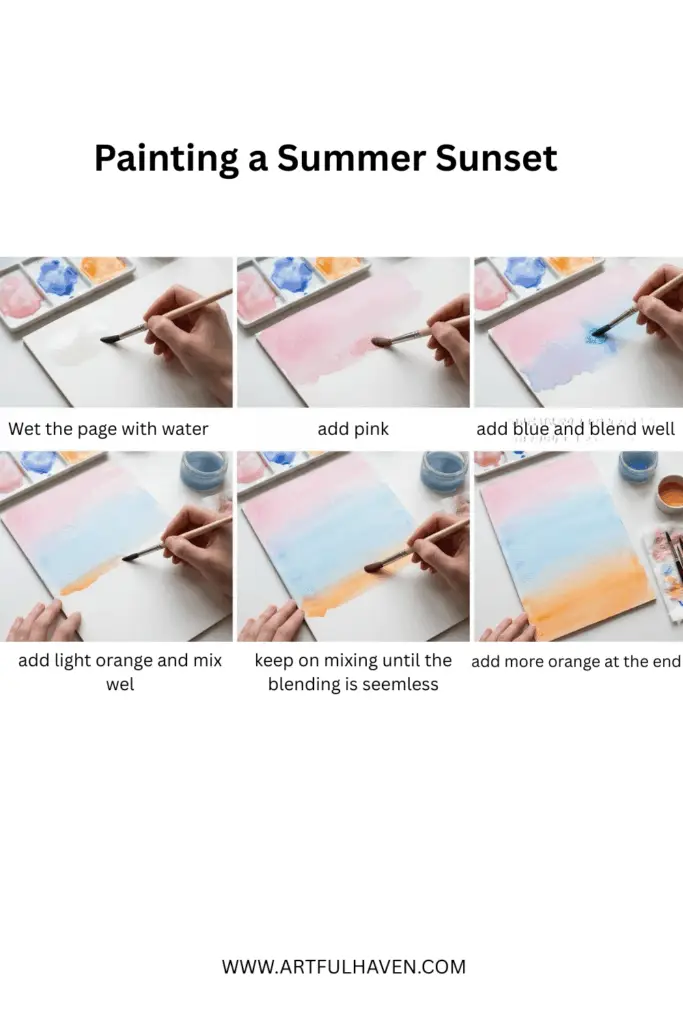
🎨 The key is working in sections. Don’t try to paint the whole sky at once. Focus on one transition at a time.
This page becomes a meditation on color and time. It’s one of those exercises that looks simple but requires presence.
31- Sketch Fast and Loose Without Lifting Your Pen
Continuous line drawing forces you to commit. No erasing. No second-guessing. Just one unbroken line that follows the contours of your subject.
Pick something simple. A shoe. A plant. A chair. Put your pen down and don’t lift it until you’re done.
This breaks the perfectionism loop. The drawing will be wonky and weird, and that’s the entire point. It trains your eye to follow form and your hand to trust instinct.
Do this regularly and your observational skills will skyrocket. You’ll start seeing objects as connected shapes instead of isolated parts.
32- Fill a Page with Textures You Find Outside
Texture is everywhere, but we rarely pay attention to it. Tree bark, brick, concrete, grass, and sand. Each one has a distinct surface that you can translate onto paper.
Use rubbings, stamps, or freehand drawing to capture different textures. Label each one with where you found it.
Why this works: It gets you outside with a specific mission. You’re not wandering aimlessly. You’re hunting for surface variety.
The page becomes a tactile record of your environment that’s impossible to capture with a camera.
Storytelling and narrative
These prompts help you build multi-page stories or document ongoing experiences across your journal.
33- Create a Visual Diary Entry for One Full Day
Pick a day and document it from morning to night using images instead of paragraphs. Draw your breakfast. Sketch the route you walked. Paint the sky at different hours.
Break the day into sections. Use small boxes or a comic strip layout. Add time stamps.
This turns an ordinary day into a narrative. You’re not waiting for something significant to happen. You’re making the mundane visible.
When you look back, you won’t remember what you did on a random Tuesday in July. But if you drew it, you will.
34- illustrate a summer tradition you keep every year
Traditions are the skeleton of a season. The thing you do every single summer, even if it’s small. Visiting the same ice cream shop. Watching fireworks from the same spot. Planting the same flowers.
Draw the tradition as if someone else is seeing it for the first time. Add details they wouldn’t know. Why this place? Why this ritual?
Traditions are memory anchors. They give continuity across years. Illustrating them makes you conscious of what you’re choosing to repeat, and why it matters.
35- Map Your Favorite Summer Walking Route
Walking routes become invisible through repetition. You stop noticing the details. Drawing a map brings them back into focus.
Draw the streets. Mark landmarks. Add the coffee shop, the dog you always see, the house with the wild garden.
Include the detours. The shortcut through the alley. The bench where you stop to rest. The tree that gives the best shade.
This isn’t a functional map. It’s a personal geography that reflects how you move through space and what catches your attention.
36- Chronicle a Plant Growing from Seed to Bloom
This is a time-lapse prompt. Plant something at the beginning of summer and draw it every few days as it grows.
Sketch the seedling. The first leaves. The stem thickening. The bud forming. The flower opening.
🌱 This teaches you to see incremental change. Growth is slow and easy to miss when you see something every day. Drawing forces you to notice.
By the end of summer, you’ll have a multi-page story of transformation that mirrors your own seasonal arc.
37- Document a Road Trip in Sketches and Words
Road trips are made of small moments strung together. Rest stop snacks. Weird roadside attractions. The view from the passenger seat.
Draw the dashboard. Sketch the motel room. Paint the landscape out the window. Write overheard conversations.
Don’t wait until you get home. Draw in the car. Draw at gas stations. Let the pages be messy and imperfect. That’s what makes them real.
This journal becomes the trip in a way photos never will. It holds the boredom, the anticipation, the in-between.
Seasonal symbols and icons
These prompts focus on the visual language of summer. The objects and images that instantly communicate the season.
38- Draw a Collection of Summer Fruits
Summer fruit is peak abundance. Strawberries. Peaches. Watermelon. Cherries. Blueberries. Drawing them is a study in color, shape, and texture.
Arrange them on a page like a still life or scatter them individually. Add cross-sections to show the inside.
Why this works: Fruit is forgiving to draw. It doesn’t need to be perfect to be recognizable. A wobbly peach still reads as a peach.
Use bright, saturated colors. Let juice drip. Make the page feel ripe and alive.
39-Paint All the Shades of Blue You See in Water
Water is never just one color. It’s turquoise, navy, teal, aqua, cobalt, cerulean. Painting a range of blues trains your eye to distinguish subtle shifts.
Create color swatches. Label each one with where you saw it. Pool water. Ocean. Lake. Puddle after rain.
This teaches color nuance. You stop seeing “blue” as a single option and start seeing it as a spectrum.
Use this page as a reference for future paintings. It becomes your personalized water palette.
40- Illustrate Iconic Summer Objects in a Grid
Grids bring order to chaos. When you arrange multiple objects in a grid, each one gets equal weight and the page feels organized.
Pick twelve summer objects. Sunglasses. Flip flops. Sunscreen. Watermelon slice. Beach ball. Hammock. Draw each one in its own box.
What makes this effective: It’s a visual inventory of the season. Each object is a symbol, and together they tell a complete story.
Use consistent line weight or coloring style to unify the grid, or let each box have its own personality.
41-Create a Page of Summer Patterns
Patterns are stripes on beach towels. Polka dots on swimsuits. Gingham on picnic blankets. Flowers on sundresses. Drawing patterns is rhythm and repetition.
Fill different sections of the page with different patterns. Let them overlap. Let them clash.
This is low-pressure creativity. You’re not drawing objects. You’re drawing lines and shapes that repeat. It’s meditative and endlessly customizable.
Use this page as a background for future collages or journaling.
42- Draw Every Type of Sandal or Shoe You Wear This Summer
Footwear is functional memory. You wore those sandals to the beach every weekend. You wore those sneakers on the camping trip. Drawing them locks in where you went and how you moved.
Shoes tell stories. The scuff on the toe. The broken strap you keep meaning to fix. The pair you only wear when you want to feel a certain way.
Label each one with a memory or a place. This becomes a walk through your summer in reverse.
43- Create a Summer Mandala
Celebrate the beauty of summer by creating your own seasonal mandala. A mandala is a circular design built from repeating shapes, patterns, and symbols. There is no right or wrong way to make one, simply let the season inspire you.
Start by drawing a circle in the center of your page. Then choose a few summer-inspired elements to repeat around it. You might include suns, flowers, leaves, seashells, butterflies, dragonflies, strawberries, waves, lemons, garden blooms, or even tiny beach umbrellas.
Work from the center outward, adding one ring of patterns at a time. Alternate larger shapes with smaller details to create rhythm and balance. If drawing feels intimidating, begin with simple dots, petals, circles, and lines. The beauty comes from repetition, not perfection.
As you fill your mandala, think about the sights, scents, sounds, and memories that make summer special to you. Use colors that capture the season such as bright yellows, sky blues, coral pinks, fresh greens, or any palette that feels like summer in your world.
When your mandala is complete, write a few words or a short phrase around the edge describing what summer means to you.
This page becomes a joyful celebration of the season, created one small shape at a time.
Whimsical Summer
44. The Little Village by the Shore
Create a charming little beach town filled with colorful cottages, striped umbrellas, flower boxes, bicycles, and tiny seaside shops.
Add whimsical residents enjoying a sunny summer day.
This page becomes a postcard from an imaginary coastal village.
45. Summer Doll Collection
Design a collection of whimsical summer dolls.
Give each doll her own outfit, hairstyle, accessories, and personality. One might be inspired by sunflowers, another by the ocean, another by a summer picnic.
This page becomes a playful fashion sketchbook.
46. The Ice Cream Street
Imagine an entire street where every building is inspired by a different ice cream flavor.
Add whimsical characters strolling past strawberry cottages, mint-green bakeries, and chocolate cafés.
This page becomes a sweet summer fantasy.
47. Beach Day Beauties
Fill your page with whimsical faces enjoying a day at the beach.
Draw oversized sun hats, vintage swimsuits, sunglasses, beach bags, seashell jewelry, and windswept hair.
This page becomes a celebration of carefree summer days.
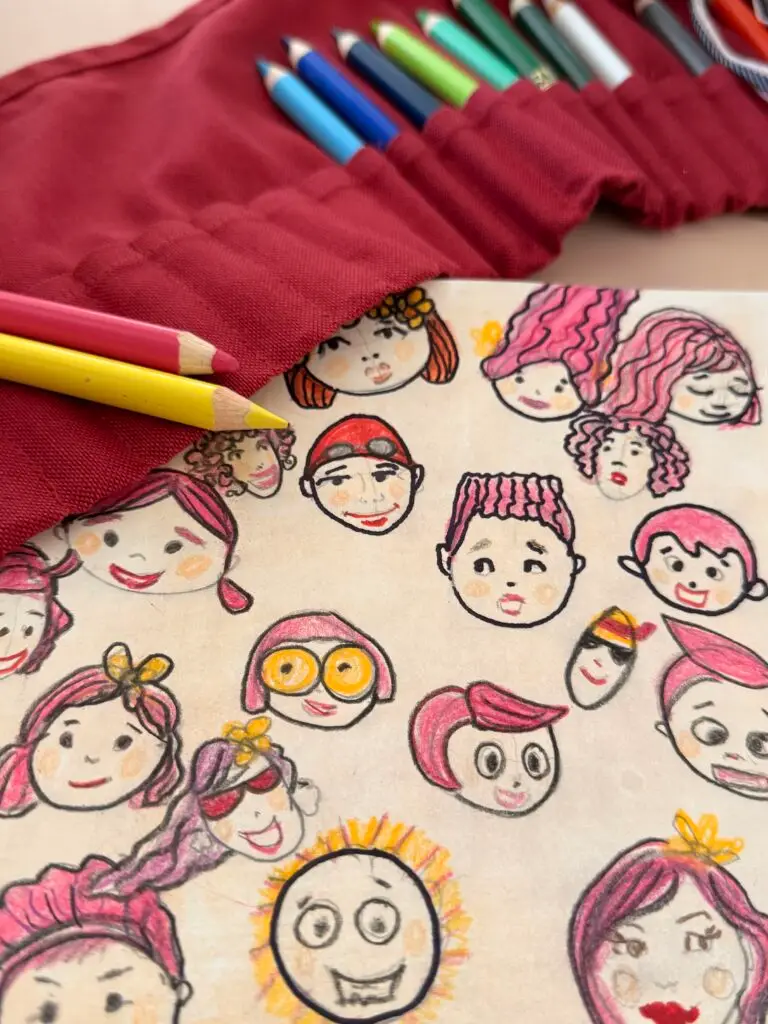
48. Fun Whimsical Faces
Fill your page with circles and ovals of different sizes. Let them tilt, and scatter across the page without worrying about placement or perfection.
Now look at your shapes with fresh eyes. Use simple lines and your imagination to transform the shapes into charming characters full of personality.
Experiment with different expressions, hairstyles, hats, glasses, flowers, and playful accessories. One face might look dreamy and thoughtful, while another could be cheerful, mischievous, or completely surprised.
This exercise is a wonderful reminder that creativity doesn’t have to start with a detailed plan. Sometimes the most delightful characters emerge from the simplest shapes. By beginning with circles and ovals, you’ll train yourself to see possibilities everywhere and discover just how easy it is to create whimsical faces.
49. Mermaids on Holiday
Imagine a group of whimsical mermaids taking a summer vacation.
What do they look like? Where are they staying? What adventures would they have?
This page becomes an underwater travel journal.
50. The Sunflower Festival
Create a whimsical town celebrating its annual sunflower festival.
Fill the streets with decorations, flower crowns, market stalls, musicians, and smiling faces.
This page becomes a joyful summer celebration.
51. The Beach Hut Neighborhood
Draw a row of whimsical beach huts, each decorated differently.
Perhaps one belongs to an artist, another to a gardener, another to a baker.
Add details that reveal each owner’s personality.
This page becomes a neighborhood of stories.
52. The Sandcastle Kingdom
Imagine a royal kingdom built entirely from sandcastles.
Draw whimsical queens, princesses, gardeners, and castle pets enjoying their summer world.
This page becomes a fairytale at the shore.
53. The Flower Market Girls
Create a page filled with whimsical faces selling flowers at a bustling summer market.
Give each character her own bouquet, style, and expression.
This page becomes a celebration of color and personality.
54. The Strawberry Patch Sisters
Draw a group of whimsical girls gathering strawberries on a warm summer morning.
Give each one unique clothing, baskets, hairstyles, and playful expressions.
This page becomes a sweet summer story.
55. The Lemonade Stand on the Corner
Draw a whimsical little lemonade stand run by a cast of summer characters. Add a hand-painted sign, a wonky striped awning, jars of lemons, a coin tin, and a line of thirsty customers — maybe a dog waiting patiently at the end.
Try this: Let the sign have a charming spelling mistake or a crossed-out price. The imperfect, handmade details are what make a whimsical scene feel alive.
56. The Summer Carnival Village
Create a whimsical village hosting a summer carnival.
Add colorful tents, ferris wheels, bunting, flower carts, performers, and delighted visitors.
This page becomes a magical summer destination.
You want to learn about Whimsical Art
Final Thought
Your journal is not a time capsule you open years from now and feel nothing. It’s a living document of this summer, these days, this version of you that exists right now.
The prompts are tools, not rules. Skip the ones that don’t fit. Repeat the ones that do. Let your pages be messy, unfinished, and completely yours. Summer doesn’t last, but the pages you make will hold it longer than memory alone ever could.
Lots of Love,
Salwa
-
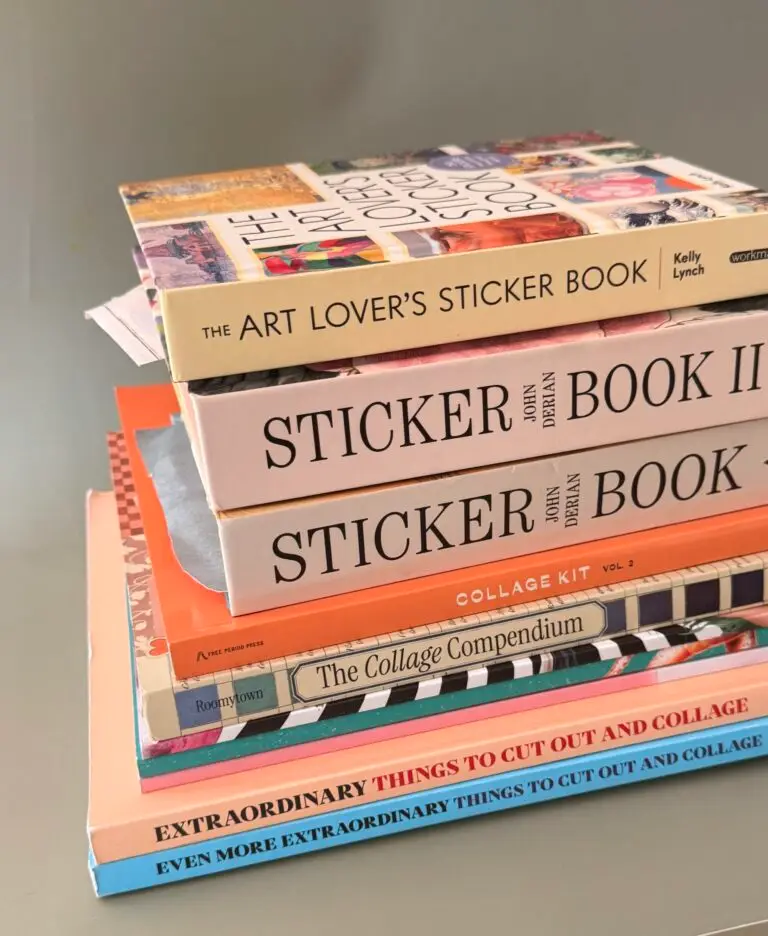
Sticker And Collage Books That Make Art Journaling Easy (And Fun!)
Spark your creativity instantly. These 9 curated books deliver pre-designed images, vintage ephemera, and ready-to-use layouts for effortless creative flow. Okay, friend, pull up a chair. I need to show you something you are going to love. Here’s a little secret professional artists know: you don’t have to dream up every idea from scratch! Great art often…
-
65 Fall Art Journal Prompts
There is something about fall that makes me want to create. Maybe it’s the way the light shifts golden through the windows. Maybe it’s the rustle of leaves underfoot. Whatever it is, fall has a way of awakening the creative spirit. Fall is the perfect season to break through creative block. The colors are richer,…
-
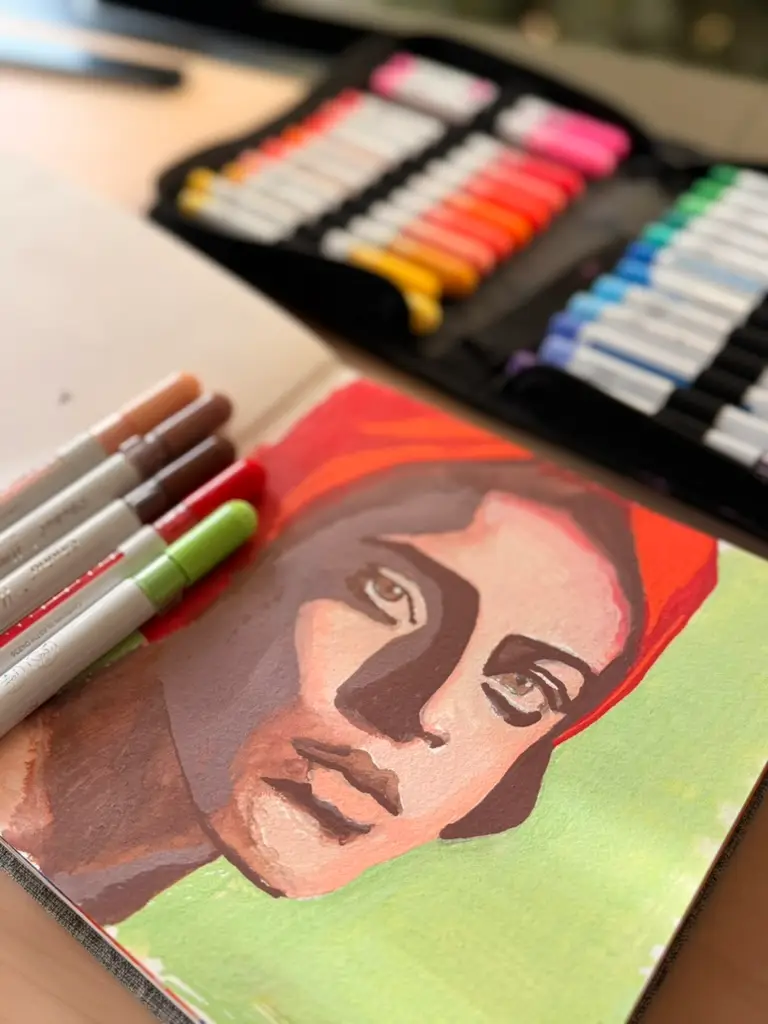
How to Paint a Portrait with Only Acrylic Markers and a Water brush
Quick Answer: To paint a portrait with acrylic markers and a water brush: sketch your portrait, divide the face into light/mid-tone/shadow areas, block in the shadows with the darker color first, fill light areas with the lighter color, bridge them with mid-tones, then soften with a water brush. This tutorial uses only Ohuhu acrylic markers and…
-
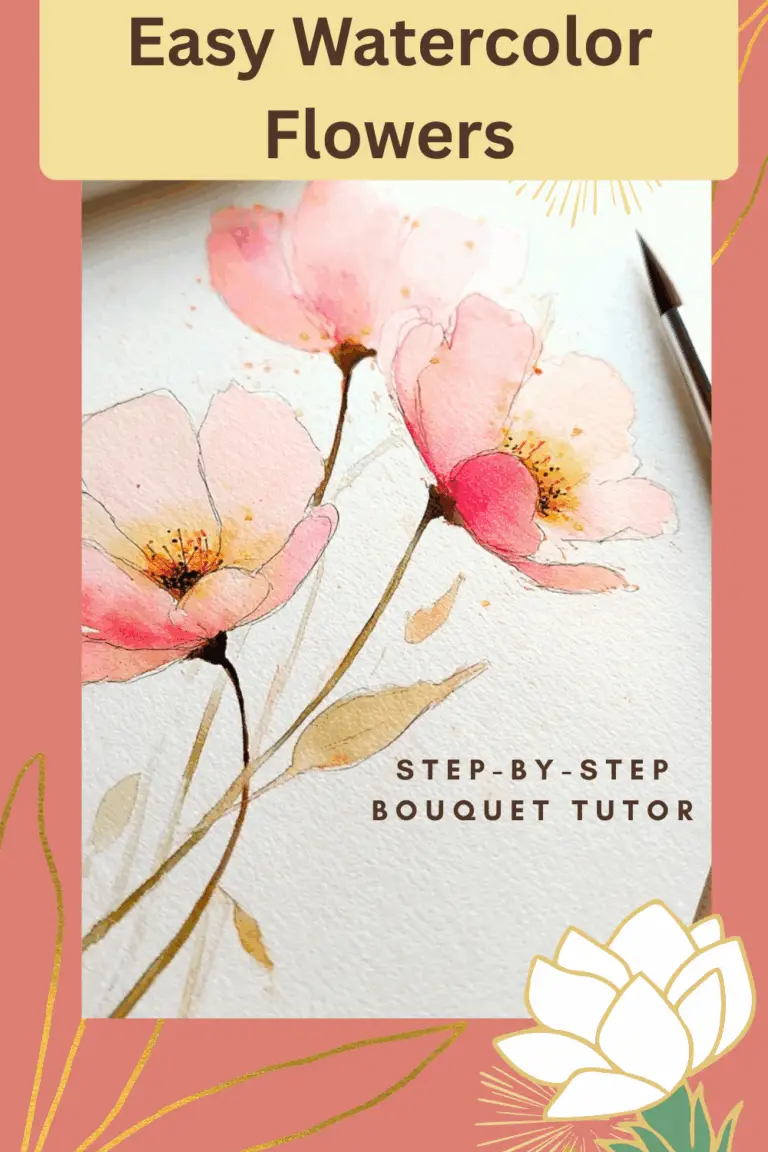
how to paint loose watercolor flowers in your art Journal
No experience needed. This gentle step-by-step tutorial teaches you how to Paint Loose Watercolor Flowers in your art Journal, creating a beautiful loose watercolor bouquet using just three colors and a few simple brushstrokes. In fact, you’ll soon see just how relaxing it can be to paint a loose watercolor floral bouquet in your art…
-
Spring Art Journal Collage: A Mindful Step-by-Step Tutorial for Beginners
Use mixed media art journaling to set spring intentions, welcome new beginnings, and let something beautiful grow step by step for beginners. By Salwa If you want to bring creative mindfulness into your art journaling practice, here is a gentle and joyful spring collage exercise made just for you. It is inspired by the season of…
-
50 Spring Art Journal Prompts
Artful haven by Salwa A spring art journal prompt is a creative suggestion or theme designed to inspire you to create a page in your art journal. Instead of staring at a blank page wondering what to draw or paint a prompt gives you a starting point, a creative challenge that invites exploration, experimentation, and personal expression….